

Preschool Daily Schedule: What Parents Can Expect
When you drop your child off in the morning and wave goodbye, it’s natural to wonder what happens next. What are they doing at 10 a.m.? When do they eat? Do they actually nap? A preschool daily schedule answers those questions, and understanding it can make both you and your child feel more at ease about the whole day.
In this guide, we walk through what a typical preschool day includes, why a predictable routine matters so much for young children, and the questions worth asking when you tour a preschool. Along the way, we’ll share a little about how the day feels in our classrooms at Raising Arizona Preschool.
What Does a Typical Preschool Day Look Like?
A typical preschool day includes a welcoming arrival, a calm morning gathering, time for play and small-group learning, movement indoors or outdoors, meals and snacks, a rest or quiet period, and afternoon activities before pickup. The exact order and timing vary by age group and by center, but most preschool schedules follow a predictable rhythm, so children always know what comes next.
Rather than a minute-by-minute timetable, think of a preschool day as a series of familiar “blocks” that repeat each day. Toddlers may have shorter activity blocks and more time for care routines, while older preschoolers can handle longer stretches of focused play and group learning. What stays the same is the sense of rhythm: children feel secure when their day has a shape they recognize.
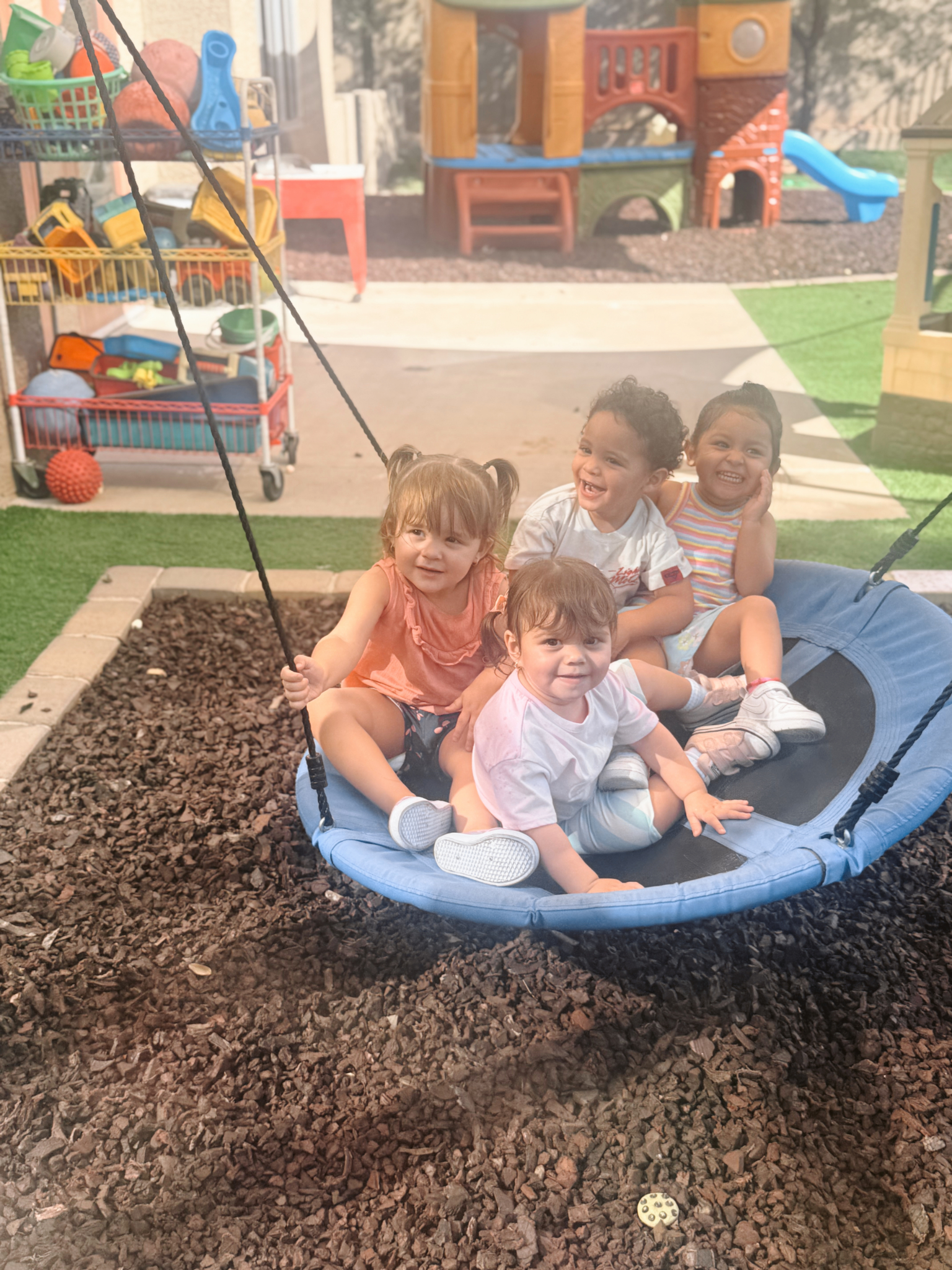
What Might a Preschool Daily Schedule Include?
Here is a sample preschool schedule to show how a day often flows. It is illustrative only: every classroom and age group is a little different, so ask your center for the routine your child will actually follow.
Sample preschool daily routine (illustrative)
| Part of the day | What children often do | What parents can ask |
| Arrival | Welcome, settling in, quiet choice activities | How do you help a child join the classroom? |
| Morning gathering | Group greeting, calming and mindfulness practices | What does this look like for my child’s age? |
| Play and exploration | Child-chosen play, small groups, teacher-supported activities | How much flexibility is there? |
| Meals and movement | Snacks, lunch, outdoor or indoor active play | How do you adjust the day when needed? |
| Rest or quiet time | Nap or calm, restful activities | What happens if my child does not sleep? |
| Afternoon and pickup | Lighter activities, wind-down, family updates | How will I hear about my child’s day? |
Please note: This is a suggested schedule meant to give families a general picture of a preschool day. Daily activities, timing, and routines may vary by center, classroom, age group, and teacher. For your child’s exact routine, ask your center director or classroom teacher.
Arrival and a Calm Start
The first few minutes of the day set the tone. A good arrival routine gives children a warm greeting, a familiar place to put their things, and an easy activity to settle into while friends arrive.
At Raising Arizona Preschool, calm starts are part of our curriculum. Through our Mindful Mornings practice, children learn three simple tools for emotional regulation: deep breathing, gratitude, and daily affirmations. These small moments help children feel grounded and ready to learn, and they build self-regulation skills children carry into kindergarten and beyond. You can read more about this approach on our curriculum page.
Play, Small Groups and Movement
Much of the preschool day is built around play, and for good reason. Play is how young children practice language, problem-solving, cooperation, and early math and literacy skills. A balanced preschool routine mixes child-chosen play with short, teacher-guided small groups and plenty of movement so children don’t sit still for too long.
Our classrooms are designed to support this kind of learning, with natural materials, soft lighting, books, plants, music, and children’s own work on the walls. If you’d like to understand why play matters so much at this age, our guide to play-based preschool learning goes deeper.
Meals, Rest and Afternoon Pickup
Meals and rest are some of the most common questions parents bring to a tour, and they’re worth asking about directly. Find out how meals and snacks work, whether you’ll need to send food, and what the rest period looks like for your child’s age. Our what to pack for daycare guide can help you prepare once you know.
Afternoons usually move at a gentler pace, with lighter activities as children wake up and families begin to arrive.
How Can a Predictable Routine Support the Transition to Preschool?
A predictable preschool routine helps children feel safe because it takes away the guesswork. When a child knows that snack comes after play and that pickup comes after rest, the day feels manageable, even on the harder mornings.
Teachers support this with simple cues: a familiar song before cleanup, a picture schedule on the wall, or a gentle heads-up that an activity is about to change. These cues help children move from one part of the day to the next without feeling rushed. Good routines also leave room for flexibility, because some children need a few extra minutes to finish a project or settle after drop-off.
Every child adjusts at their own pace, and that’s completely normal. If your child is having a hard time saying goodbye in the mornings, our preschool separation anxiety and drop-off guide has practical ideas for easing that transition.
How Does a Full-Day Schedule Differ From a Shorter Day?
A full-day preschool schedule typically includes everything in a shorter day, plus lunch, a longer rest period, and afternoon activities. Children who attend for longer hours may also have more free play at the beginning and end of the day, when arrival and pickup times vary from family to family.
When you tour, ask how the schedule works for the specific hours your child will attend. For example, what happens for early arrivals, and what does the late afternoon look like? Our centers open as early as 5:30 a.m. at some locations, so it’s worth checking the hours for the center you’re considering. You can explore our programs to see what’s offered for your child’s age.
What If My Child Does Not Nap or Needs More Transition Time?
Not every child sleeps at rest time, and that’s okay. Many centers offer quiet alternatives, such as books or calm activities on a mat, so children who don’t nap can still rest their bodies without disturbing friends who are sleeping. Ask your center what this looks like in practice.
The same goes for transitions. Some children need a little more time or support to move between activities, especially in the first weeks. A thoughtful preschool will describe how teachers adapt to individual children rather than promising that every child follows the same timeline.
What Should Parents Ask About the Daily Schedule During a Tour?
A tour is the best time to see a preschool routine in action. Here are five questions worth bringing with you:
- How does the daily schedule differ by age group? Toddlers and older preschoolers usually need different pacing, activity lengths, and care routines.
- What happens at rest time if my child doesn’t sleep? Ask about quiet alternatives and how long rest time lasts.
- How do you adjust outdoor time for the weather? In the Phoenix Valley, heat can change when and how children play outside, so ask how the center keeps active play going on hot days.
- What should my child’s arrival look like? Find out whether there’s a preferred drop-off window and how teachers help children settle in.
- How will I get updates about my child’s day? Ask which app or method the center uses and how often you’ll hear from teachers.
A preschool that answers these questions clearly and is happy to show you the routine in person is giving you a real window into how your child will spend their days.
Frequently Asked Questions
Is preschool scheduled every minute? No. Most preschools follow a predictable rhythm of activity blocks, such as arrival, play, meals, rest, and pickup, rather than a strict minute-by-minute plan. Teachers keep the order consistent while leaving room to adjust when children need more time.
Do all age groups follow the same routine? Usually not. Toddlers often have shorter activities and more time for care routines, while older preschoolers can handle longer stretches of play and group learning. Ask your center for the routine for your child’s specific classroom.
What happens at rest time? Most preschools include a rest or quiet period after lunch. Children who fall asleep can nap, and children who don’t often rest quietly with books or calm activities. Policies vary by center, so ask how rest time works where your child will attend.
How can parents ask for their child’s classroom schedule? Simply ask your child’s teacher or center director. Many preschools post the daily routine in the classroom or share it through a parent app, and a good center will be glad to walk you through it during a tour.
See a Day in Our Classrooms
At Raising Arizona Preschool, our days are built around the things young children need most: a calm start, plenty of play, caring teachers, and a routine they can count on. Our Mindful Mornings practice gives children simple tools for calm and confidence, and every day is shaped by our belief that children learn best when they feel safe and delighted.
Schedule a tour at Raising Arizona Preschool and ask to see the daily routine for your child’s classroom. We’d love to welcome you at one of our locations in McDowell, Olive Ave, Mesa, or Bell Road. Contact us to find a time that works for your family.
This article shares a general, suggested preschool routine for informational purposes. Schedules and activities at each Raising Arizona Preschool location may vary by center, classroom, and teacher. Contact your preferred location for details about your child’s classroom.