

Your preschooler may already be a rhymer. Maybe they giggle at “silly willy” or chant the end of a favorite book before you turn the page. That playfulness is exactly what rhyming games build on. You do not need flashcards, letters, or a reading lesson. You need your voice, a few toys or picture cards, and a willingness to be a little silly.
Rhyming words are words that sound the same at the end, like cat and hat or bug and rug. Rhyming activities for preschoolers are listening games played out loud with songs, stories, movement, and picture cards. Children first learn to hear when two words rhyme, and later learn to come up with a rhyme on their own. No reading is required.
Below are eight rhyming games you can play at home, in the car, or at the dinner table. Each one includes the materials, simple steps, words you can say, a sample word pair, and an easier version for when your child is just getting started.
What rhyming means for preschoolers
Two words rhyme when their ending sounds match. Say cat and hat slowly. The beginning sounds are different (c and h), but the ending, -at, sounds the same. That shared ending is the rhyme.
For a young child, rhyming is a way of noticing the sounds inside words instead of only their meaning. It is part of a bigger set of listening skills that Reading Rockets describes as phonological awareness, which is about hearing and playing with the sounds in spoken words. Those listening skills help prepare children for reading later on, and they all start out loud.
Start with hearing rhymes before making them
There are two different rhyming skills, and it helps to know which one your child is practicing.
- Recognizing a rhyme means hearing two words and noticing they sound alike at the end. “Do cat and hat rhyme?” Your child can answer with a nod, a clap, or by pointing to a picture.
- Producing a rhyme means coming up with a rhyming word on their own. “What rhymes with cat?” This is harder, because your child has to search their memory for a word that fits.
Most children recognize rhymes before they can produce them. Head Start’s early learning framework describes this same path, with young preschoolers first enjoying and imitating rhymes, then telling when two words rhyme with an adult’s help, and later spotting rhymes more independently. Every child moves along that path at their own pace.
The good news is that you can model either skill without turning it into a test. Say the rhyme yourself, out loud, and invite your child to join in. “Cat, hat. Those sound alike! Cat, hat.” If your child repeats it, laughs, or just listens, they are still learning. The activities below start with hearing and move gradually toward inventing.
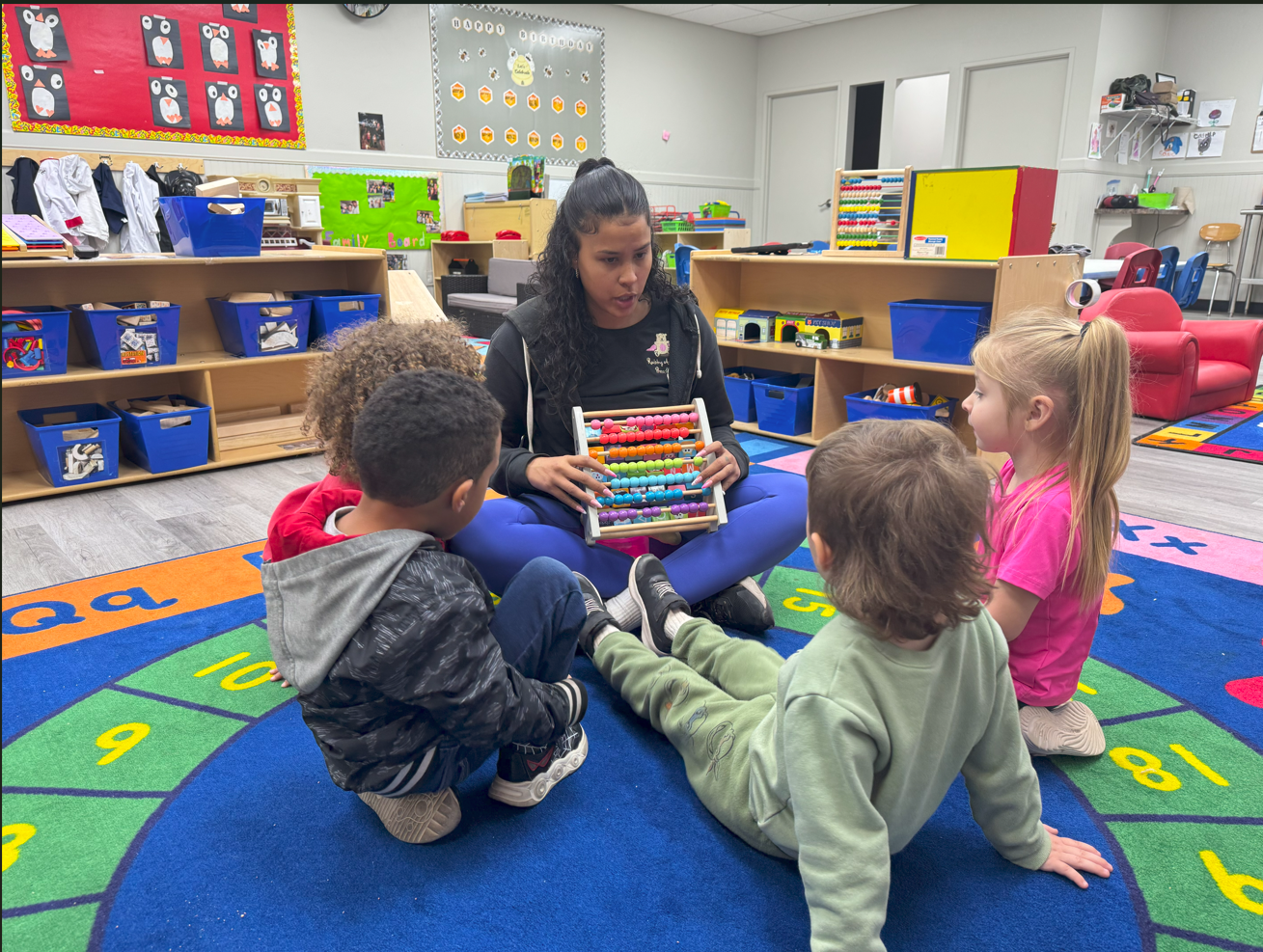
8 rhyming activities for preschoolers
Use this table to choose a game that fits your materials and your child’s mood today.
| # | Activity | Materials | Skill | Sample pair |
|---|---|---|---|---|
| 1 | Finish the rhyme | A familiar nursery rhyme or rhyming book | Hearing, then filling in | wall/fall |
| 2 | Which one rhymes? | Three large picture cards or toys | Hearing | cat/hat (not sun) |
| 3 | Find your rhyme partner | Pairs of large picture cards | Hearing and matching | bug/rug |
| 4 | Silly puppet rhymes | A puppet or stuffed animal | Hearing mistakes | bee/tree |
| 5 | Clap if it rhymes | Just your voices | Hearing | goat/boat |
| 6 | Move to the rhyme | Open floor space | Hearing, then making | hop/stop |
| 7 | Rhyme pair sort | Large picture cards, two baskets or mats | Hearing and sorting | cake/snake |
| 8 | Nonsense rhyme fun | Any object or name | Making rhymes | ball / zall |
A quick safety note: for younger children and any child who still mouths objects, use large cards and toys that are too big to fit in the mouth, and stay close during play.
1. Finish the rhyme
Materials: A nursery rhyme your child knows well, or a favorite rhyming picture book
Steps:
- Say or read the rhyme the usual way a few times so it feels familiar.
- Next time, pause just before the last rhyming word.
- Wait a few seconds and let your child fill it in. If they do not, say it yourself with a smile.
What to say: “Humpty Dumpty sat on a wall. Humpty Dumpty had a great…” (pause) “…fall! Wall, fall. Those sound the same at the end.”
Sample pair: wall/fall
Easier version: Pause and then say the word together instead of waiting for your child to say it alone. Hearing the rhyme many times comes before filling it in.
2. Which one rhymes?
Materials: Three large picture cards or toys, such as a cat, a hat, and a sun
Steps:
- Hold up the cat and say its name clearly.
- Hold up the other two pictures and name each one.
- Ask which one sounds like cat at the end.
What to say: “Here is a cat. Listen: cat. Now, hat… sun. Which one sounds like cat? Cat, hat? Cat, sun?”
Sample pair: cat/hat (sun is the one that does not rhyme)
Easier version: Use just two cards, one that rhymes and one that does not, and say both words right next to cat so your child can hear the difference.
3. Find your rhyme partner
Materials: Three or four pairs of large picture cards, such as bug and rug, bee and tree, fish and dish
Steps:
- Lay the cards face up on the floor.
- Pick up one card and name it.
- Help your child look for the card that rhymes, saying each name aloud as you look.
What to say: “I have a bug. Bug. Who is bug’s rhyme partner? Let’s listen. Bug, tree? Bug, rug! Bug and rug sound alike.”
Sample pair: bug/rug
Easier version: Start with only two pairs on the floor. As your child gets comfortable, add more pairs or turn the cards face down for a memory game.
4. Silly puppet rhymes
Materials: A puppet or a stuffed animal
Steps:
- Introduce the puppet as a friend who loves rhymes but sometimes gets them wrong.
- Have the puppet say pairs of words, some that rhyme and some that do not.
- Let your child help the puppet by telling it when the words rhyme and when they do not.
What to say (in a puppet voice): “Bee, tree! I made a rhyme! Okay, now: bee… banana! Did I rhyme?”
Sample pair: bee/tree
Easier version: Have the puppet say only real rhymes at first, and invite your child to repeat them. Introduce the “silly mistakes” once your child is laughing along.
5. Clap if it rhymes
Materials: Just your voices
Steps:
- Explain the rule: clap when two words rhyme, stay still when they do not.
- Say pairs of words slowly and clearly.
- Clap together for the rhyming pairs.
What to say: “Ready? Goat, boat.” (clap) “Goat, cup.” (stay still) “Moon, spoon.” (clap)
Sample pair: goat/boat
Easier version: Clap along with your child on every rhyming pair at first, so they follow your hands while listening. Over time, let them try to clap first.
6. Move to the rhyme
Materials: Open floor space, indoors or outside
Steps:
- Pick an action word and say a rhyming word that tells your child what to do next.
- Do each movement together.
- Repeat with new action words and rhymes.
What to say: “Hop, hop, hop… and STOP!” “Jump, jump, jump… and BUMP down on your bottom!” “Spin, spin, spin… now give me a grin!”
Sample pair: hop/stop
Easier version: Use the same rhyme a few times in a row until your child can predict it. Once it feels easy, pause before the second word and see if they shout it out.
7. Rhyme pair sort
Materials: Large picture cards for two rhyme families (for example, cake and snake, plus pig and wig), two baskets, mats, or pieces of paper
Steps:
- Set out two baskets. Put a starter card in each, such as cake in one and pig in the other.
- Hand your child the remaining cards one at a time and name each picture.
- Ask which basket the card sounds like.
What to say: “This is a snake. Snake. Does snake sound like cake or like pig? Cake, snake. It goes in the cake basket!”
Sample pair: cake/snake
Easier version: Sort just one rhyme family. Ask, “Does this sound like cake? Yes or no?” and put the “no” cards to the side.
8. Nonsense rhyme fun
Materials: Anything nearby: a ball, a spoon, a family member’s name
Steps:
- Pick an object and say its name.
- Make up a silly rhyme by changing the first sound. Made-up words count.
- Invite your child to make one too, and celebrate any attempt.
What to say: “Ball. Ball, zall, mall, fall! Wow, ball has lots of rhymes. Can you make a silly one? What about… ball, pall? Or gall? Your turn!”
Sample pair: ball/zall
Easier version: Offer two choices instead of an open question: “Does ball rhyme with tall or cup?” Or make the rhymes yourself and let your child decide which one is the silliest. Nonsense words are welcome here, since the goal is playing with sounds, not knowing vocabulary.
Sample picture card pairs
If you want to make your own cards, draw or print simple pictures of these pairs. Say each pair out loud first and check that it sounds alike in the way your family speaks.
| Pair | Pair | Pair | Pair |
|---|---|---|---|
| cat/hat | bug/rug | bee/tree | fish/dish |
| goat/boat | cake/snake | pig/wig | moon/spoon |
| mouse/house | bear/chair | car/star | sun/bun |
Rhyming is about sounds, not letters
Rhyming games work with your ears, not your eyes. Reading Rockets notes that phonological awareness activities are done out loud, while phonics connects sounds to printed letters. Both matter, but rhyming comes first because it only needs listening.
That is why it helps to keep printed words out of these games, at least at first. Some words rhyme but are spelled differently, like bear and chair or blue and shoe. Other words look similar in print but do not rhyme, like home and come. If your child sees the letters, they may start matching what the words look like instead of how they sound.
A simple approach:
- Play rhyming games out loud first, using spoken words, songs, and pictures.
- Point out rhymes in books you are already reading by saying them, not by pointing at letters.
- Add print later, if your child is interested. Writing cat and hat next to each other can be a fun “look, they share letters too” moment, but it is not the starting point.
Rhyming games for bilingual families
If your family speaks Spanish, English, or more than one language at home, rhyming games work in every one of them. Play in the language that feels most natural for you. Head Start encourages using a child’s home language for sound games like these, and notes that adults lead these games best in a language they know well.
A few tips:
- Use real rhymes in the language you are speaking. A word pair that rhymes in English usually will not rhyme once it is translated. Cat and hat rhyme, but gato and sombrero do not. Choose pairs that rhyme in the language you are using.
- Try Spanish pairs your child already knows, such as gato / pato, luna / cuna, ratón / botón, mesa / fresa, and foca / boca.
- Use familiar songs and rhymes from your family or culture. Traditional rhymes like Aserrín, aserrán or Los pollitos dicen are full of sounds to play with. Pause before a rhyming word, just like in Activity 1.
- Keep the languages in their own games. Playing a full round in Spanish and another in English works better than mixing a Spanish word with an English word and asking if they rhyme.
- Accents and mixing languages are not mistakes. Children growing up with two languages may pronounce words differently or switch between languages mid-sentence. That is a normal part of learning more than one language, not something to correct during play. If a pair sounds like a rhyme to your child the way your family says it, celebrate it.
Rhyming and reading at Raising Arizona Preschool
Rhyming fits naturally into the songs, stories, and conversations that fill a preschool day. In learning through play, children explore language the same way they explore blocks and paint: by trying things out, laughing, and doing it again. Our curriculum weaves early literacy into hands-on activities and daily routines, alongside mindfulness and social-emotional growth.
Rhyming is one of many listening and language skills children grow before school. For the bigger picture of language, math, self-care, and social skills, see our kindergarten readiness checklist. Children learn these skills at different paces, and there is no single age when every child should rhyme on their own.
Frequently asked questions
Do children need to read before trying rhyming games? No. Rhyming games are listening games played out loud, so children do not need to know letters or read words. Hearing that two words sound alike at the end, like cat and hat, is a skill children can practice through songs, nursery rhymes, picture cards, and movement long before they begin reading.
What if my child cannot think of a rhyming word? That is very common. Coming up with a rhyme is harder than hearing one, and most children recognize rhymes before they can produce them. Offer two choices instead of an open question, say the rhyme yourself and invite your child to repeat it, or switch to a hearing game like clapping when two words rhyme. Keep it playful and stop while it is still fun.
Can we play rhyming games in more than one language? Yes. Rhyming games work in Spanish, English, and other languages. Use word pairs that truly rhyme in the language you are speaking, such as gato and pato in Spanish or cat and hat in English, and play in the language you are most comfortable using. Different accents and switching between languages are a normal part of growing up bilingual.
Come hear learning through play in action
At Raising Arizona Preschool, songs, stories, and playful conversation are part of every day, guided by hand-selected, experienced teachers who meet each child where they are. Our Quality First certified, mindfulness-based approach helps children build curiosity, confidence, and a genuine joy for learning.
Explore our preschool and pre-K programs, learn more about our curriculum, or contact us with questions. We would love to welcome your family at our McDowell, Mesa, Olive Ave, or Bell Road location.
Schedule a tour and see how songs, stories, and silly sounds become everyday learning.